Biochemical Methane Potential (BMP) Test
Anaerobic batch fermentation assay for the evaluation of biogas and biomethane yield
- Biogas and Biomethane
- Anaerobic Digestion
- AMPTS® III
What does a BMP test measure?
Biochemical methane potential, also known as biomethane potential, describes how much methane an organic material can produce under defined anaerobic conditions. BMP testing is commonly used to characterise feedstocks, compare materials and assess their suitability for anaerobic digestion.
The result is usually reported as normalised methane volume per gram of volatile solids. It provides a consistent basis for comparing substrates, mixtures, pretreatments and additives under the same laboratory conditions.
How does a BMP test work?
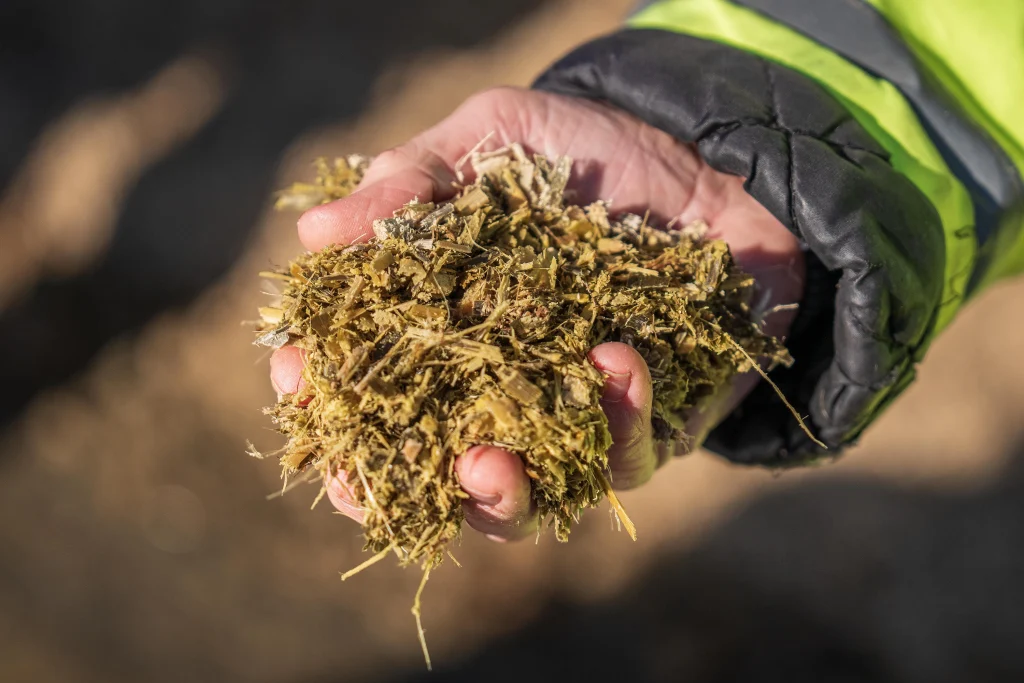
A measured amount of substrate is mixed with an active inoculum and incubated in sealed reactors at a controlled temperature. Blank reactors containing only inoculum are tested in parallel, together with a positive control such as microcrystalline cellulose.

Methane production from the blank is subtracted from the methane measured in the substrate sample. The cumulative methane yield after the test reaches its termination criteria is then reported as the experimental BMP.
BMP results represent methane potential under controlled batch conditions. Actual production in a full scale digester will also depend on retention time, loading rate, process temperature and interactions between feedstocks.

Avoid common errors in BMP tests
Cassie Welander, PhD • 13 July, 2026
Mistakes in experimental design, inoculum selection, sample preparation, mixing and data analysis can affect BMP results. Read our article to learn how to avoid the most common problems.
What can BMP testing be used for?
BMP tests can support several types of laboratory and operational decisions:
- Compare methane yields from different feedstocks or suppliers
- Assess variations between deliveries or production batches
- Evaluate substrate mixtures and codigestion strategies
- Compare untreated and pretreated materials
- Study the effects of additives or potential inhibitors
- Estimate the value of a feedstock based on methane potential
- Screen materials before continuous digestion trials
- Assess the anaerobic biodegradability of organic materials
BMP testing and VDI 4630
The german standard VDI 4630 is one of the most widely recognised protocols for biochemical methane potential testing. It provides guidance on substrate characterisation, sample preparation, experimental conditions, gas measurement and the validation of results.
Under the protocol, BMP tests are normally performed at either 37 ± 2 °C or 55 ± 1 °C. An active digested sludge inoculum is used, with an inoculum to substrate ratio of at least 2:1 based on volatile solids. The experiment should also include an inoculum blank and a positive control, such as microcrystalline cellulose.
Visit our VDI 4630 protocol page for further information about reactor sizes, sample preparation, controls and validation criteria.
AMPTS® III
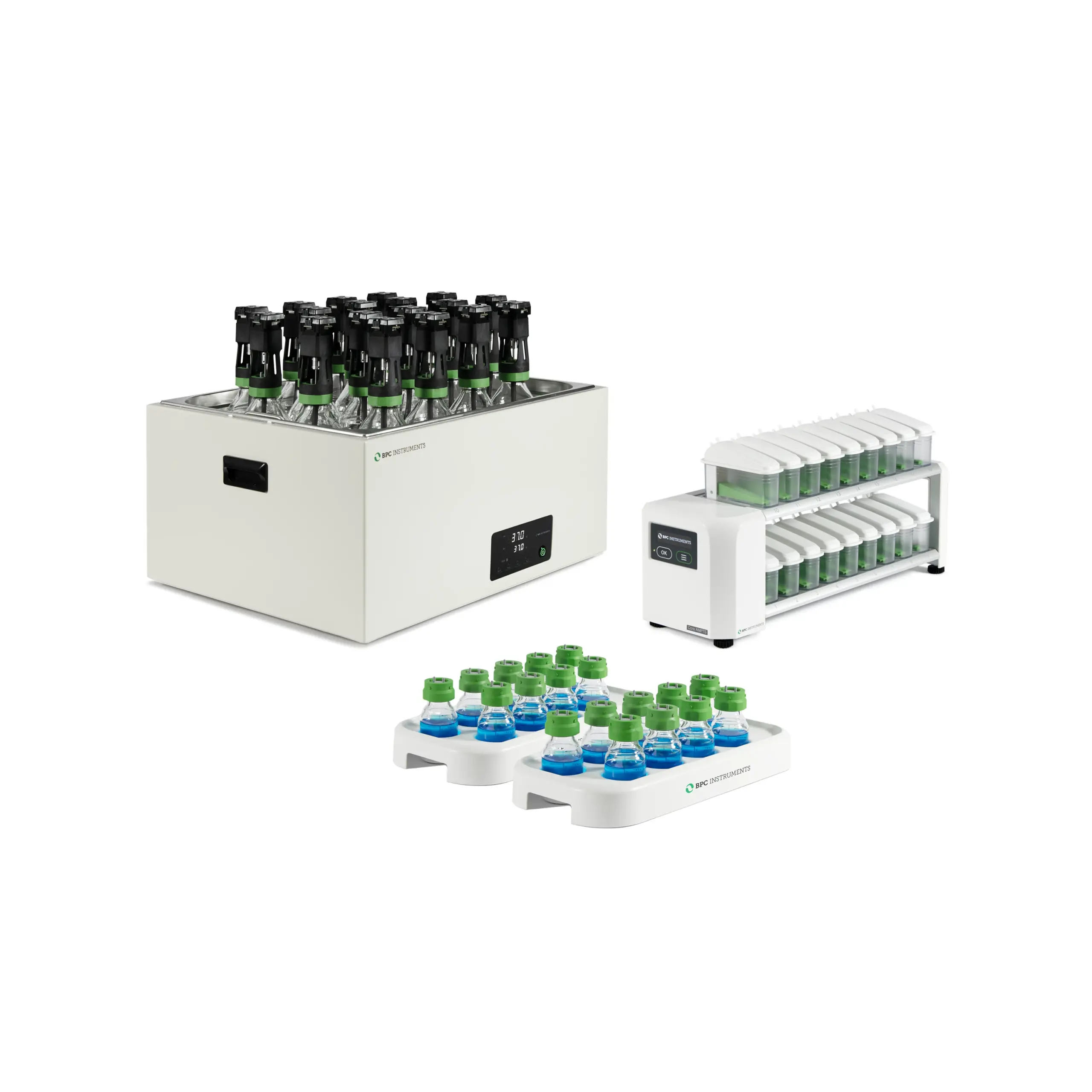
Automatic Methane Potential Test System (AMPTS®) III is the research-standard analytical tool preferred by scientists and engineers for conducting various anaerobic batch fermentation tests. AMPTS® is the only automated test apparatus referenced in VDI 4630 for biochemical methane potential (BMP), specific methanogenic activity (SMA) and residual gas potential (RGP).
The system consists of 18 parallel reactors (9 reactor configuration available) and the same number of gas flow meters (flow cells) attached to a detection unit for online, automatic data acquisition. This allows for the real-time investigation of a high number of feedstock samples with high precision and accuracy.
Recommended experimental conditions
Experimental conditions
Application notes for conducting BMP tests with AMPTS III
Conditions
Mixing (agitation system included with AMPTS III)
Temperature
Mesophillic (37°C) or thermophillic (55°C)
Method & Equipment
Gas volume measurement (CH4)
Reactor Size
0.5 – 2.0 L
Sample
Application notes for conducting BMP tests with AMPTS III
Inoculum
Digested sludge from municipal sewage waste or agricultural biogas installations.
Amount of Inoculum
400 – 1600 g (depending on reactor size)
Substrate Form
Powder or fragments < 10 mm
Inoculum: Substrate ratio (ISR)
2:1
Blank & Controls
Blank: inoculum only
Positive control e.g. microcrystalline cellulose
Validation criteria
Application notes for conducting BMP tests with AMPTS III
Replicates
3
Test Duration
25-60 days, until a plateau (BMP0.5%)
Other Criteria
Positive control BMP should be within ±10% of the
theoretical (e.g., cellulose: 671-820 biogas or 336-410
CH₄/g VS).
RSD of test material < 15% (homogeneous) or < 20%
heterogeneous)
Related news

Related scientific references
-

Synergistic valorization of crop residues and dairy wastewater via biochar-mediated anaerobic digestion enhancement
Lan, T., Wen, Y., Tong, L. Ergu, A., Zhang, L., Wu, D., Xing, A., Hong, M.Biomass and Bioenergy (2026) 212
Biomethane, WastewaterJournal article2026 -
Cellulolytic fungi from sewage sludge and their potential to improve methane fermentation
Ćwiertniewicz-Wojciechowska, C., Cema, G.,Ziembińska-Buczyńska, A.Biomass Conversion and Biorefinery (2026) 16:145
BiomethaneJournal article2026 -
Effect of harvesting interval on biogas production from Napier grass
Shah, J., Senapathy, G. J., Bisht, A., Bhagat, M. S., Rasheed, M. A.Energy, Ecology and Environment (2026), 1-15
BiomethaneJournal article2026 -
Reliable biochemical methane potential testing: insights and recommendations from global interlaboratory study
Hafner, S. D., Leca, E., Sambusiti, C., Astals, S., Azam, O., Koch, K., Liu, J., Møller, H. B., Nistor, M., Olaya-Rincon, M., Peyrelasse, C., Ward, A. J., Zennaro, B., Monlau, F. Bioresource Technology (2026) Volume 446
BiomethaneJournal article2026