
Biogas plants often compare feedstocks by price per tonne. Price alone, however, says little about methane yield, degradation rate, water content or how consistent the material will be from one delivery to the next. Biochemical methane potential (BMP) testing helps plant operators assess these factors under controlled anaerobic conditions. It provides data on potential methane production and how gas output develops over time, which can support purchasing, supplier evaluation, feedstock blending and routine quality control.
In this article, we look at what feedstock testing can tell plant operators, how BMP test results can be connected to plant economics and where the method has its limits.
7 min read
What affects the value of a biogas feedstock?
The value of a feedstock depends on both its biological performance and the cost of bringing it into the process. Water content is a basic example. A tonne of material with high moisture content contains less organic matter available for methane production, while the plant still pays to transport, store and handle the full weight.
Other factors can add cost or limit how the material is used. Some feedstocks require pretreatment, special storage or more demanding handling. Nutrient balance, contaminants and potential inhibitors may affect the suitable feeding rate, while digestate quality can influence the value and use of the final residue.
The Biomethane Industrial Partnership, launched by the European Commission and industry under REPowerEU, recommends evaluating potential feedstocks across several areas, including biomethane yield, suitability for anaerobic digestion, availability, transport, storage, pretreatment, digestate handling and economic feasibility.1
A simple comparison illustrates why this broader assessment matters:

Example
Suppose Feedstock A costs €20 per tonne and produces 60 normal cubic metres of methane per tonne of fresh material. Its purchase cost is therefore around €0.33 per normal cubic metre of methane.
Feedstock B costs €30 per tonne and produces 120 normal cubic metres. Its purchase cost works out at €0.25 per normal cubic metre of methane.
Feedstock B costs 50% more per tonne, yet it delivers twice the expected methane yield. Based on the purchase price alone, the cost per normal cubic metre of methane is around 25% lower.
The final calculation should also include transport, storage, handling and any required processing. Gate fees can shift the economics further when a plant receives payment for accepting a waste stream. Comparing these costs with expected methane production gives operators a clearer view of the value each feedstock may bring to the plant.
What is feedstock testing?
Feedstock testing is the laboratory evaluation of biomass, residues or organic waste before or during use in a biogas plant. Common parameters include total solids, volatile solids, nutrient composition, carbon to nitrogen ratio, methane potential, degradation behaviour and possible inhibitors.
Total solids show how much of the sample remains after water is removed. Volatile solids provide an estimate of the organic material available for biological degradation.
Methane yield may be reported per tonne of fresh material, dry matter or volatile solids. Temperature, pressure and moisture corrections can also affect reported gas volumes. Results from different sources therefore need to be compared carefully.
What can BMP testing tell a plant operator?
A BMP test measures how much methane a feedstock can produce under defined anaerobic conditions. When gas production is monitored throughout the test, the result also shows how quickly the material is converted.
Together, the final methane yield and the shape of the production curve give operators a clearer basis for comparing feedstocks and judging how they may perform in practice.
Methane potential
The final BMP value estimates the methane potential of a feedstock or mixture. Results are commonly expressed per gram of volatile solids, but for plant operation they can also be converted into expected methane production per cubic metre of feedstock. This makes it easier to relate the laboratory result to feedstock volumes, transport, storage and the amount of material entering the digester.
Degradation behaviour
The production curve shows how methane formation develops over time, which is particularly relevant when retention time in the full scale plant is limited. A feedstock may reach a high final methane yield while releasing a large share of that methane too slowly to be fully utilised under the plant’s operating conditions.
Materials that break down more quickly can make more efficient use of the available digester capacity. Slower feedstocks may require a longer retention time or some form of pretreatment, especially when they contain a high proportion of lignocellulosic material. Particle size and pretreatment can influence both the degradation rate and the final methane yield.
Comparative performance
Testing samples under the same conditions makes it easier to compare suppliers, individual deliveries, feedstock mixtures and treatment methods. Operators can also assess different inclusion levels before introducing larger quantities into the plant, reducing uncertainty around how a new material may behave.
Where inhibition is a concern, BMP testing can provide an early indication of possible effects at the concentrations used in the experiment. The Biomethane Industrial Partnership describes BMP testing as the most realistic and commonly used experimental method for assessing biomethane yield, while also providing information on anaerobic biodegradability, degradation rate and potential inhibition.
Why should feedstocks be tested regularly?

Feedstock quality can shift over time, even when the material looks the same. Agricultural substrates are affected by climate, season, harvesting and storage, while industrial residues may change when suppliers adjust raw materials or production methods. Mixed waste streams can vary from one collection to the next.
These changes may alter solids content, biodegradability and methane potential, which is why regular quality checks are important. The Biomethane Industrial Partnership recommends adapting the testing frequency to the level of variation. For example, a stable agricultural substrate from a long term supplier may need less frequent analysis than a mixed industrial residue with a less predictable composition.
Stored consistently, the results can build into an internal feedstock database. This allows operators to compare suppliers, track seasonal patterns and identify unusual deliveries before they affect plant performance.
How can feedstock testing support plant profitability?
BMP data becomes commercially useful when it is combined with the wider cost of sourcing and using the feedstock.
A practical comparison may include methane yield per tonne of fresh material, purchase price or gate fee, transport and storage costs, handling requirements, likely degradation within the available retention time and variation between batches. Nutrient balance, inhibition risk and digestate quality may also affect operating costs.
A calculation based on expected methane production and delivered cost may be enough to screen several options. More detailed testing can then be reserved for the most promising materials. BMP tests can also support co-digestion. Several mixtures can be compared before the feeding plan is changed, helping operators assess methane yield, nutrient balance and degradation profile under the same conditions.
What are the limitations of BMP testing?
While BMP testing is useful for comparing methane potential between samples carried out under controlled batch conditions, it rarely paints the whole picture. Full scale plants operate continuously, where performance is also shaped by organic loading rate, retention time, temperature, mixing, nutrient availability and the existing microbial community.
The result should therefore be treated as a reference point for comparison rather than a direct prediction of plant performance. Long term stability, practical loading limits and behaviour under continuous feeding are better assessed using continuous reactor tests, such as the Bioreactor Simulator III, followed by plant trials and operational data.
Together, BMP results, feedstock analysis and plant experience give operators a more reliable basis for deciding which materials to accept, at what inclusion level and how they should be introduced into the process. To use this information in routine decision making, the testing process must also remain consistent from one sample to the next.
Building a feedstock quality control routine
Representative sampling, correct solids analysis and a consistent test setup help operators distinguish genuine changes in feedstock quality from variation caused by the test procedure. Total solids and volatile solids should therefore be measured before the BMP test so that samples can be prepared correctly and results compared on the same basis.
The BMP test also requires suitable blanks, controls and replicates. Gas volumes must be corrected and normalised before results from different experiments can be compared with confidence. Our article on common BMP test errors covers these practical steps in more detail.

Avoid common errors in biochemical methane potential (BMP) tests
Cassie Welander, PhD • 13 July, 2026
Once the test is complete, results should be stored in a consistent format. Supplier, sampling date, storage conditions, solids content, methane potential and degradation profile are all useful reference points. New materials can then be screened before larger quantities are accepted. Established feedstocks can be tested at intervals suited to their variability, value and importance to the plant.
Over time, this creates a more reliable picture of how each feedstock performs. Combined with plant data and commercial costs, BMP results can support decisions on purchasing, supplier selection, blending and feeding strategy.

Further reading
This article draws on A methodology for identifying sustainable biomethane feedstocks, prepared by Task Force 3.4 of the Biomethane Industrial Partnership. Published and presented at the European Biogas Conference in Brussels, October 2024.
Dr Jing Liu, CEO of BPC Instruments, served as group leader and rapporteur for the report.

Reviewed by
Mihaela Nistor, PhD
Senior Sales Scientist
Biogas & Biomethane
Learn more about our work in biogas and biomethane
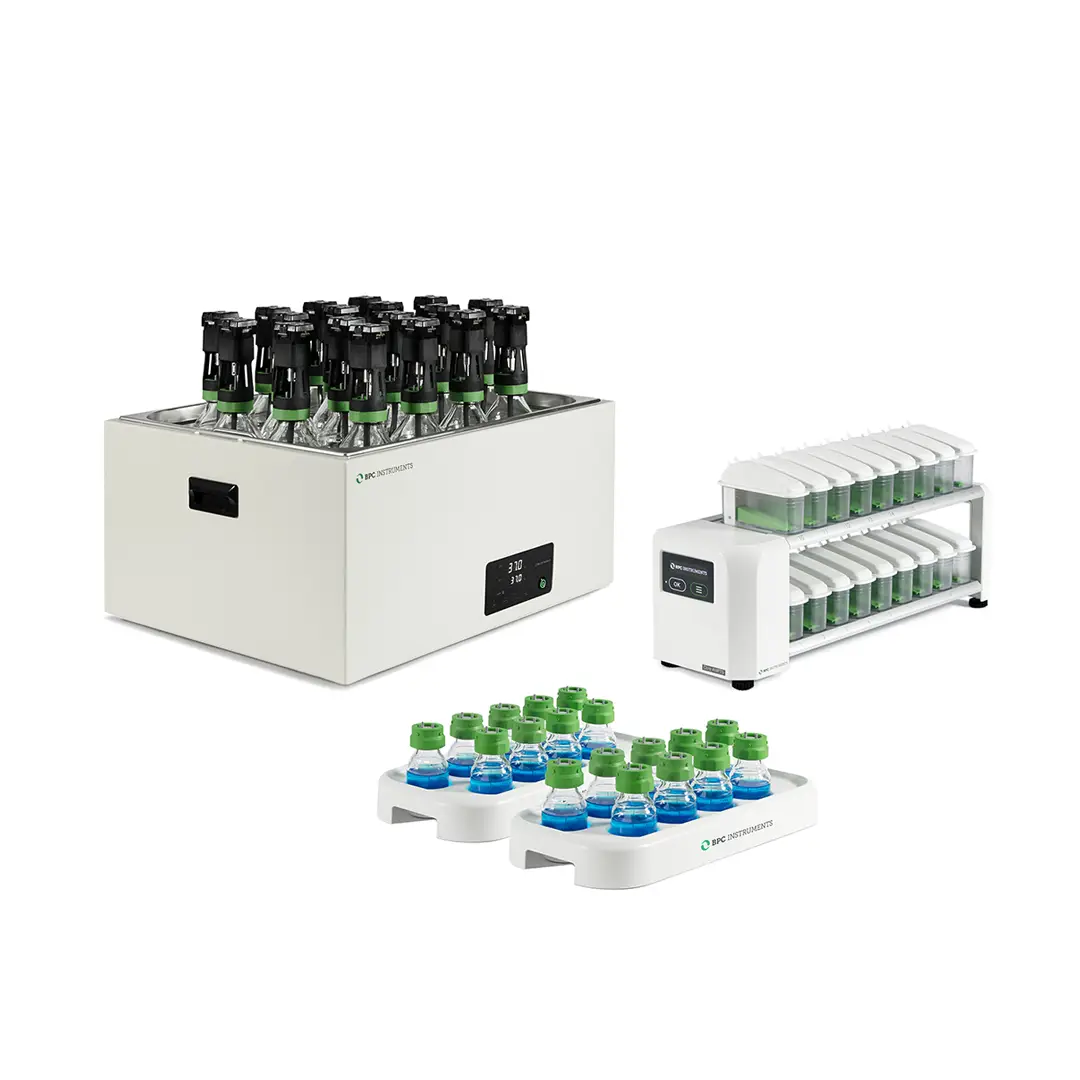
AMPTS® III
Analytical tool for biogas and biomethane analysis
Related news

- A methodology for identifying sustainable biomethane feedstocks, Task Force 3.4 of the Biomethane Industrial Partnership, Oct 2024. ↩︎