Specific Methanogenic Activity (SMA) Test
Assess the ability of anaerobic sludge to convert a defined substrate into methane under controlled conditions
- Biomethane
- Anaerobic Digestion
- AMPTS® III
Specific methanogenic activity tests are used to evaluate the activity of anaerobic sludge or inoculum. The test measures the rate at which a simple organic substrate is converted into methane.
Sodium acetate is commonly used as the substrate. This focuses the test on the methane-forming stage of anaerobic digestion, which is often one of the most sensitive stages in the process.
What does an SMA test measure?
SMA describes the methane production rate relative to the amount of biomass in the sample. It can help identify how effectively the methanogenic community converts an available substrate into methane.
The result is normally calculated from the stable part of the methane production curve and normalised to the amount of volatile solids in the inoculum.
How does an SMA test work?
The inoculum is placed in a reactor with a defined amount of sodium acetate. Methane production is then measured under controlled temperature and mixing conditions.
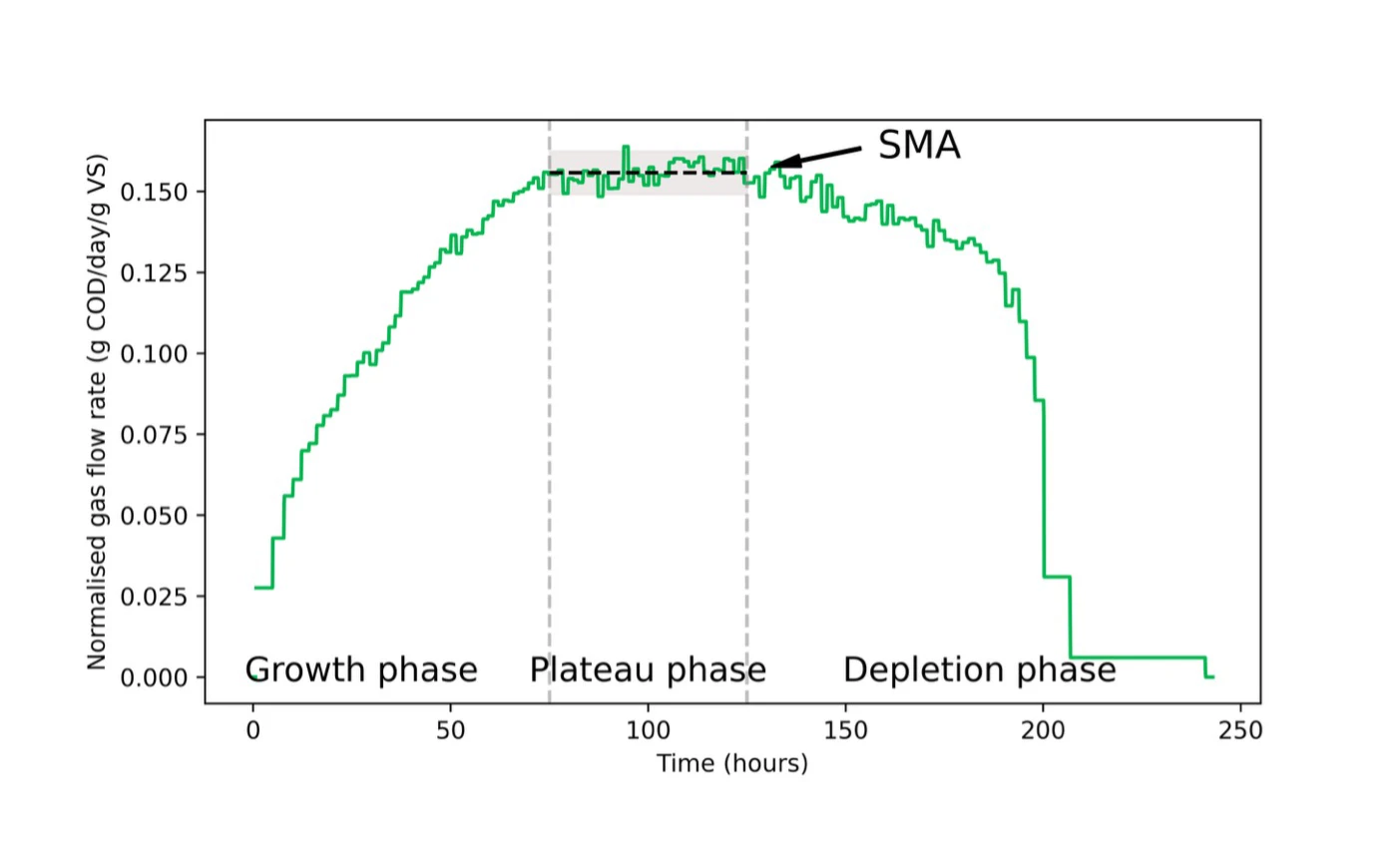
A sludge blank containing inoculum without added substrate is included to account for methane produced from residual organic material in the inoculum. The blank-corrected methane production rate is then normalised to the amount of volatile solids in the sample.
When setting up the assay for a new inoculum, several substrate concentrations should be tested. This helps identify a suitable concentration and establish whether the measured activity has reached a stable plateau.
What is the difference between SMA and BMP?
A biochemical methane potential test determines how much methane an organic substrate can produce. An SMA test measures how quickly anaerobic sludge or inoculum converts a defined substrate into methane.

Biochemical Methane Potential (BMP) Test
BMP testing is mainly used to evaluate feedstocks and other organic materials. SMA testing focuses on the biological activity of the inoculum. Visit our protocol page for biochemical methane potential test to learn more.
When should I use SMA testing?
SMA testing can be used when you want to:
- Assess inoculum quality when selecting or purchasing seed biomass
- Compare the activity of different sludge samples
- Support the selection of a suitable organic loading rate during plant start-up and operation
- Monitor changes in sludge activity over time
- Compare the inhibitory or toxic effects of substances and feedstocks
- Evaluate how changes in operating conditions affect methanogenic activity
SMA tests are relatively quick and normally take between three and seven days. The use of a defined substrate also makes it easier to compare results obtained under the same experimental conditions.
Recommended experimental conditions
Experimental conditions
Application notes for conducting SMA tests with AMPTS III
Conditions
Mixing (agitation system included with AMPTS III)
Temperature
Mesophillic (37°C) or thermophillic (55°C)
Method & Equipment
Gas volume measurement (CH4)
Reactor Size
0.5 – 2.0 L
Sample
Application notes for conducting SMA tests with AMPTS III
Inoculum
Digested sludge from municipal sewage waste or agricultural biogas installations. Dilute in medium down to 10 g VS/l.
Amount of Inoculum
400 – 1600 g (depending on reactor size)
Substrate Form
Sodium acetate in powder form
Inoculum: Substrate ratio (ISR)
2:1-5:1*
Blank & Controls
Blank: inoculum only
*Recommended to explore a range of substrate concentrations to find optimal value.
Validation criteria
Application notes for conducting SMA tests with AMPTS III
Replicates
3
Test Duration
3-7 days
Other Criteria
Ensure that the rate has reached a plateau value
AMPTS® III
Reliable SMA calculations require complete methane production curves. The stable phase of the reaction must be identified so that the methane production rate can be calculated correctly.
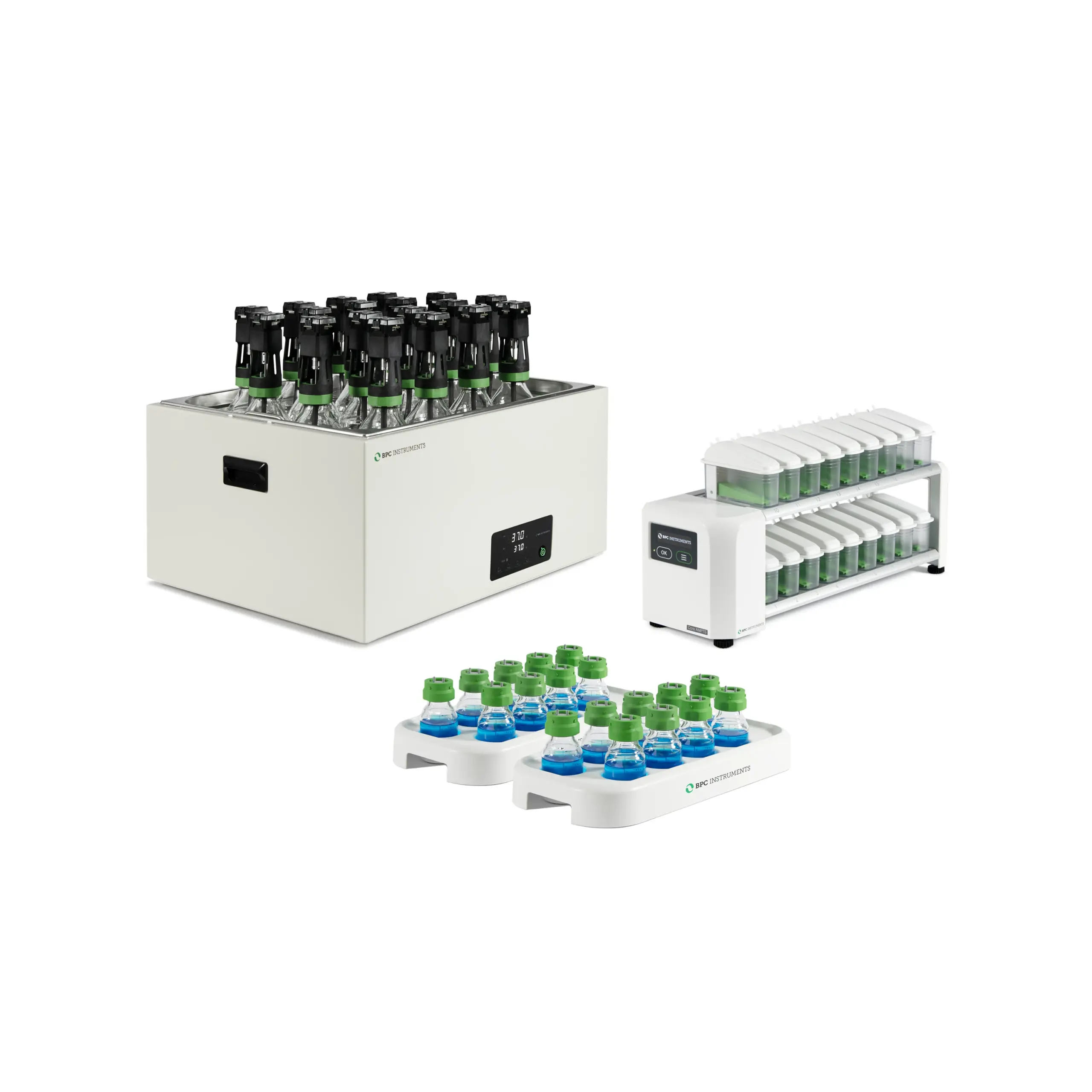
AMPTS® III automates mixing and methane volume measurement across up to 18 parallel reactors. Several substrate concentrations, blanks and replicates can therefore be tested at the same time.
The software records the full methane production profile throughout the experiment. This makes it easier to identify the stable phase, compare samples and establish standardised assay conditions for a particular inoculum.
Related scientific references
-

Synergistic valorization of crop residues and dairy wastewater via biochar-mediated anaerobic digestion enhancement
Lan, T., Wen, Y., Tong, L. Ergu, A., Zhang, L., Wu, D., Xing, A., Hong, M.Biomass and Bioenergy (2026) 212
Biomethane, WastewaterJournal article2026 -
Cellulolytic fungi from sewage sludge and their potential to improve methane fermentation
Ćwiertniewicz-Wojciechowska, C., Cema, G.,Ziembińska-Buczyńska, A.Biomass Conversion and Biorefinery (2026) 16:145
BiomethaneJournal article2026 -
Effect of harvesting interval on biogas production from Napier grass
Shah, J., Senapathy, G. J., Bisht, A., Bhagat, M. S., Rasheed, M. A.Energy, Ecology and Environment (2026), 1-15
BiomethaneJournal article2026 -
Reliable biochemical methane potential testing: insights and recommendations from global interlaboratory study
Hafner, S. D., Leca, E., Sambusiti, C., Astals, S., Azam, O., Koch, K., Liu, J., Møller, H. B., Nistor, M., Olaya-Rincon, M., Peyrelasse, C., Ward, A. J., Zennaro, B., Monlau, F. Bioresource Technology (2026) Volume 446
BiomethaneJournal article2026