Using AMPTS® III to evaluate storage and pretreatment methods for biogas substrates
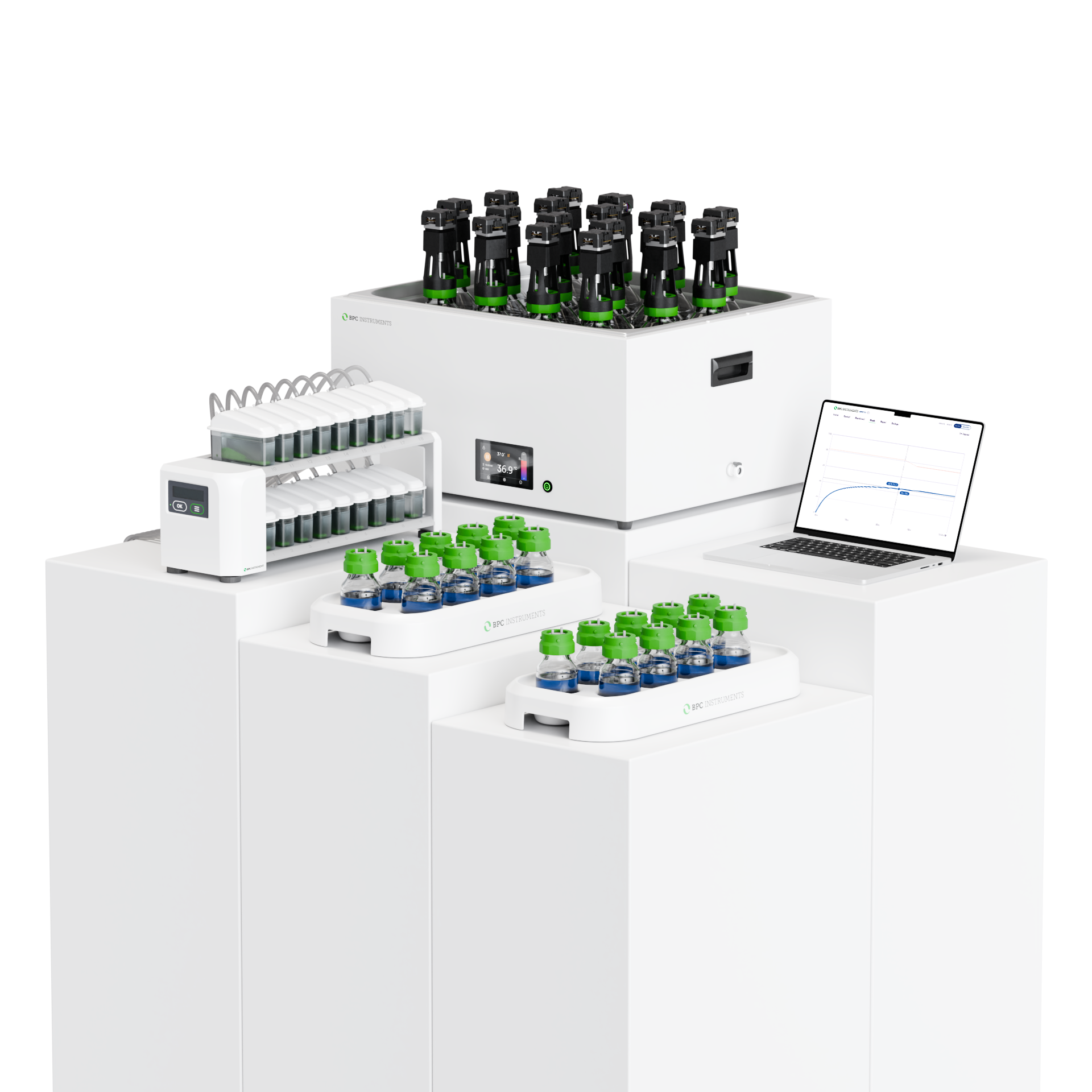
At the BIO2E platform at INRAE in Narbonne, researchers have been studying how different storage and pretreatment strategies affect methane production from multi-service environmental crops. The work, led by PhD student Clément Van Vlierberghe, looked at how to store and prepare these crops before they’re used in anaerobic digestion. To measure methane potential, the team used the AMPTS® III from BPC Instruments. The system made it possible to follow gas production closely throughout the process.

What happens during storage
The first part of the study focused on co-ensiling rye with other substrates to adjust the moisture content. The question was whether adding materials would affect the methane yield. BMP tests carried out using AMPTS® III showed that the energy potential of the silage was maintained, even with added co-substrates.
This means it’s possible to adapt the storage mix without losing energy value, which is helpful when working with variable feedstock conditions.

Alkaline storage and dry matter
The second part of the study looked at alkaline storage under different conditions. The team tested a range of reagent concentrations and storage setups. One clear result was that a high dry matter content was important. It helped keep the silage stable during storage and made the alkaline pretreatment more effective in terms of methane production.

The AMPTS® III played a key role in tracking how gas production changed with each variation, giving the team consistent and comparable results.
Supporting practical research
This project shows the value of working with reliable tools when testing storage methods or new feedstock strategies. With AMPTS® III, it becomes easier to see how changes in preparation or composition affect methane output. For both researchers and plant operators, having access to this kind of data is a big help in choosing the right approach.
The results from this study have already led to four scientific publications and several articles aimed at the biogas industry. It is a good example of how careful testing, supported by robust measurement, can contribute to more efficient and informed use of feedstock.
Biogas & Biomethane
Evaluate feedstocks, methane potential and anaerobic process behaviour with automated gas measurement.
AMPTS® III
Industry leading automated batch testing for BMP, SMA, residual gas potential and inhibition studies.

Talk to a Specialist about AMPTS® III
Contact us today to discuss biogas applications utilising AMPTS® III
"*" indicates required fields


Related scientific References
-

Contrasting high-dose behavior of activated carbon and zero-valent iron in anaerobic digestion of waste activated sludge: Inhibition by adsorption versus saturation by redox reactions
Song, H., Song, E., Jeong, S., Zhao, X., Jeong, D.-W., Lee, J.Environmental Technology & Innovation, Volume 44 (2026) 105309
-
Effectiveness of Anaerobic Pretreatment of Silver-Recovery Photographic Wastewater with Readily Biodegradable Supplementation: From Laboratory Screening to Semi-Technical-Scale Verification
Zieliński M, Kazimierowicz J, Dębowski M., Water. 2026; 18(21):2735.
-
Pulsed feeding strategies for enhanced in situ lactate-to-caproate conversion during self-buffered chain elongation of urban organic waste
Sbicego, M., Angelini, F., Gallipoli, A., Angelini, S., Gianico, A., Crognale, S., Tonanzi, B., Brasiello, A., Frugis, A., Rossetti, S., Braguglia, C. M. ; Biomass and Bioenergy, Volume 216 (2027) 109693
-
Boosting short-chain fatty acids production from up-concentrated magnetic sludge via alkaline thermal hydrolysis: performance and mechanism
Liu, Y., Chen, W., Hao, Y., Zhou, Q., Wei, Y., Xi, B.; Bioresource Technology; Volume 463 (2027) 135742